Restaurant SOP Monitoring: What Happens During the Dinner Rush?

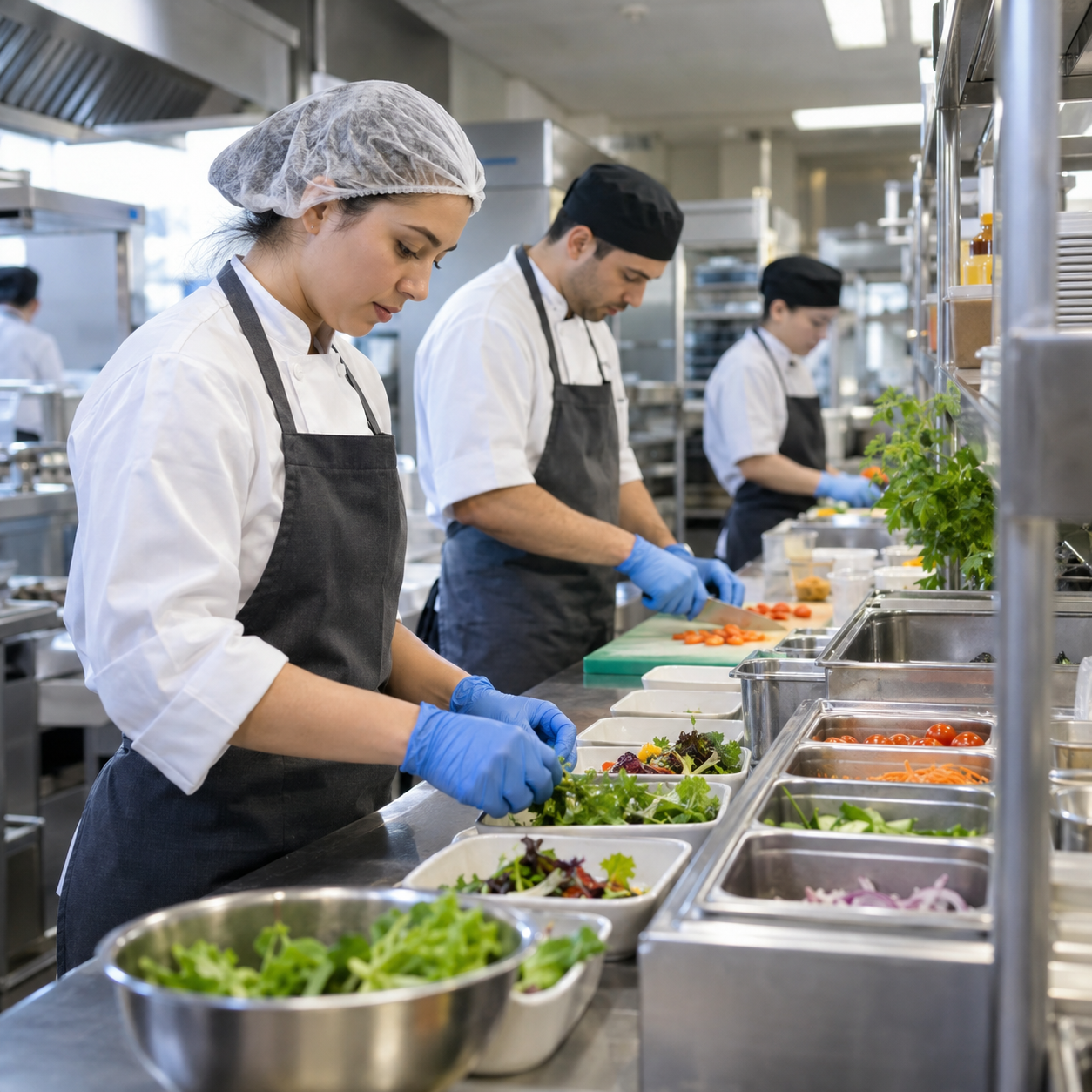
Why procedures that look correct before service can break down under peak operating pressure - and how existing CCTV can help restaurants surface visible process gaps while there is still time to respond.
5:30 PM - Before service
The kitchen looks ready. Prep stations are organized, cleaning tasks are complete, staff have been briefed, and the opening checklist has been signed off.
7:10 PM - Orders begin stacking up
Staff start moving faster between prep stations. One person covers another station for a few minutes. A cleaning step that is normally completed immediately is pushed back while the team catches up.
8:15 PM - Peak dinner rush
A worker moves from one configured prep area to another. The expected visible hygiene step is not observed within the normal sequence. At the same time, the manager is handling a customer issue at the front of house.
9:00 PM - The next walkthrough
The workstation looks normal again. The missed step is no longer visible. The CCTV camera recorded the sequence, but no one was watching that camera at the exact moment the process drifted.
The problem is not that the restaurant has no SOP. The problem is that a procedure can look correct during a scheduled check and still break down for a few minutes when service pressure changes. Those few minutes are often the part a paper checklist cannot show.
The SOP did not disappear. The operating condition changed.
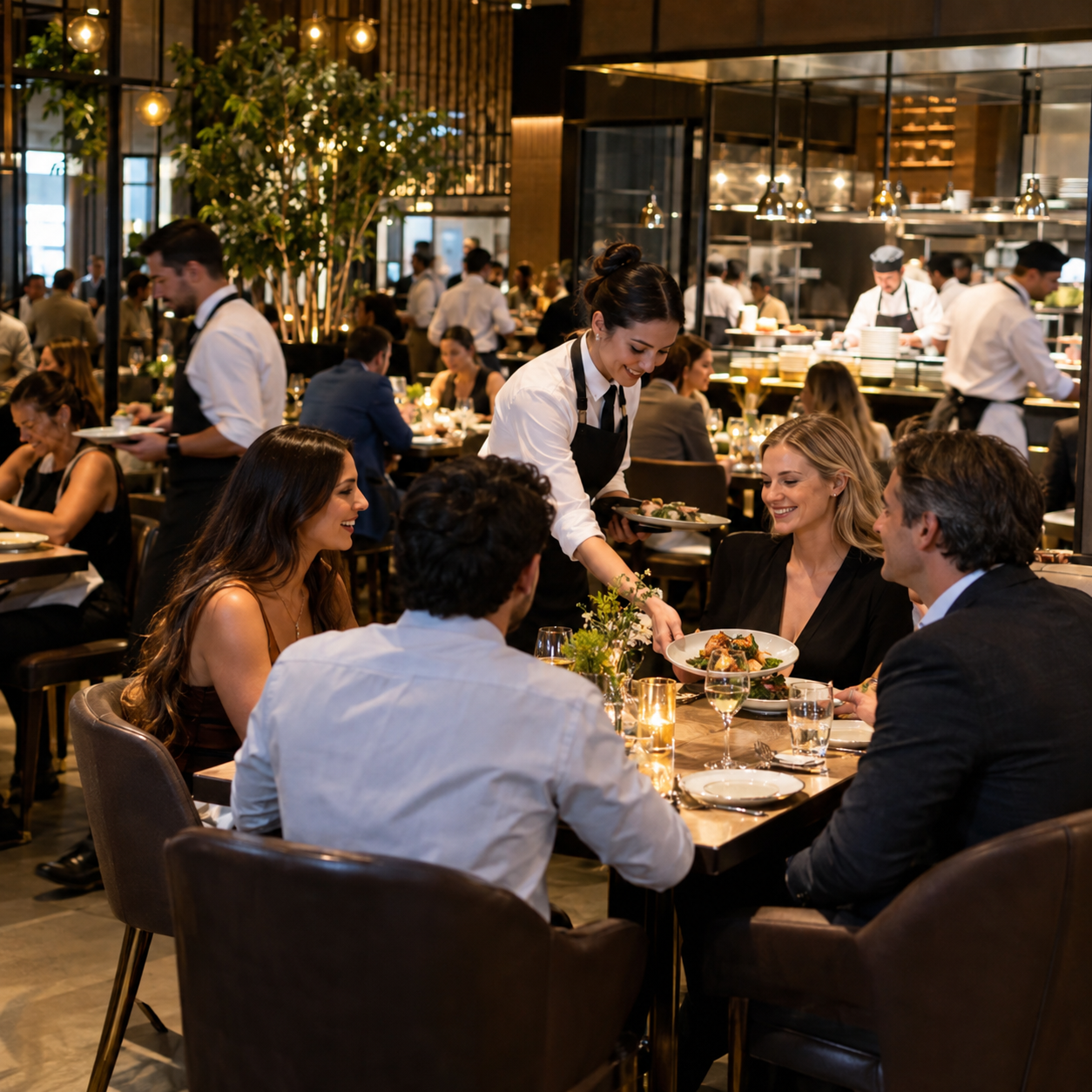
Restaurant procedures are usually written for consistency, but service conditions are not consistent. During a busy period, employees face more orders, more handoffs, more movement between workstations and more competing priorities. A process that is easy to follow during pre-service preparation can become harder to execute when the kitchen is under pressure.
CDC restaurant research gives this problem a practical foundation. In its EHS-Net work on safe food preparation, workers identified time pressure caused by high business volume or inadequate staffing as a factor that made all seven studied safe food-handling practices harder to perform. The same research highlighted the importance of equipment, management emphasis, training and restaurant procedures.
That does not mean every busy restaurant becomes non-compliant. It means peak service is a useful place to look for operational drift because the environment is different from the one seen during an opening check.
This is the role FlowLinks can play in restaurant SOP monitoring. It can use suitable existing CCTV feeds to watch selected, visually observable workflows continuously, apply configured rules, and surface exceptions without requiring a manager to watch every screen.
The event can retain the time, camera, configured zone and associated image or clip for review. If alerts are enabled for that workflow, the responsible manager or supervisor can be notified according to the restaurant's configured process.
Follow one SOP through the shift, not ten SOPs at once
For camera-based monitoring, the most useful starting point is not “monitor every SOP.” It is one clearly defined, visually observable process in one real zone.
Consider a simple hygiene transition between two preparation areas. The restaurant defines the rule. For example: an employee leaves a configured raw-prep area, enters a ready-to-eat preparation zone, and a visible hygiene or glove-change step is expected within the restaurant's defined workflow.
FlowLinks does not decide what that SOP should be. The restaurant defines the operating rule; FlowLinks evaluates whether the configured visible sequence appears to have occurred in the camera view.
Research context
CDC observations found that food workers were more likely to wash their hands when they were not busy. Workers also described time pressure from high business volume or inadequate staffing as a barrier to appropriate handwashing. In another EHS-Net summary, about one in four workers reported not always washing hands between handling raw meat/poultry and ready-to-eat food, while one in three did not always change gloves between those tasks. These findings are restaurant-specific research signals, not a universal compliance rate for every operation.
What the camera actually saw
A restaurant manager thinks in procedures. A camera sees movement, location, visible objects and sequences over time. Those are different things.
Suppose Camera K2 covers the transition between a raw-prep station and a ready-to-eat station. The useful observation is not simply “person detected.” It is closer to: employee exits Zone A -> employee enters Zone B -> configured visible step expected -> expected evidence is not observed within the defined sequence -> create a review event.
This is where video analytics becomes operational rather than decorative. A bounding box around a person is not an SOP system. The value comes from combining person tracking, zone logic, timing, visible actions and restaurant-defined rules.
FlowLinks already positions this capability within its restaurant hygiene & SOP compliance workflow, where suitable existing kitchen cameras can be configured around selected hygiene rules, handwash steps and SOP sequences.
Busy kitchens make visibility harder, not just behaviour harder
The same dinner rush that puts pressure on procedures also makes computer vision more difficult. People overlap. Hands disappear behind counters. Utensils block the view. One employee crosses in front of another. A visible action may begin in one camera and end outside the frame.
That means camera suitability has to be evaluated per SOP. A ceiling camera may be excellent for movement between zones but poor for a small hand-level action. A closer side view may show glove presence clearly but miss what happens behind a tall prep counter.
The practical question is not “Do we have CCTV?” It is: Can the current camera see the evidence needed for this specific rule, at the distance, angle and lighting conditions that exist during a real shift?
The same camera-suitability principle applies across video surveillance analytics: the camera, scene geometry and target evidence matter as much as the model itself.
One uncertain frame should not become an SOP violation
A worker may be hidden for a second. Another employee may block the view. A glove may be visible in one frame and obscured in the next. If every moment of uncertainty creates an alert, managers will receive noise instead of useful exceptions.
A more practical approach is to use persistence and sequence logic. For example: configured SOP step expected -> visible evidence not observed -> condition persists beyond the restaurant-defined tolerance -> FlowLinks creates an event for review.
The tolerance should depend on the process. A two-second occlusion and a sustained missed step are not the same operational event.
Where FlowLinks fits: from busy-shift footage to a reviewable event
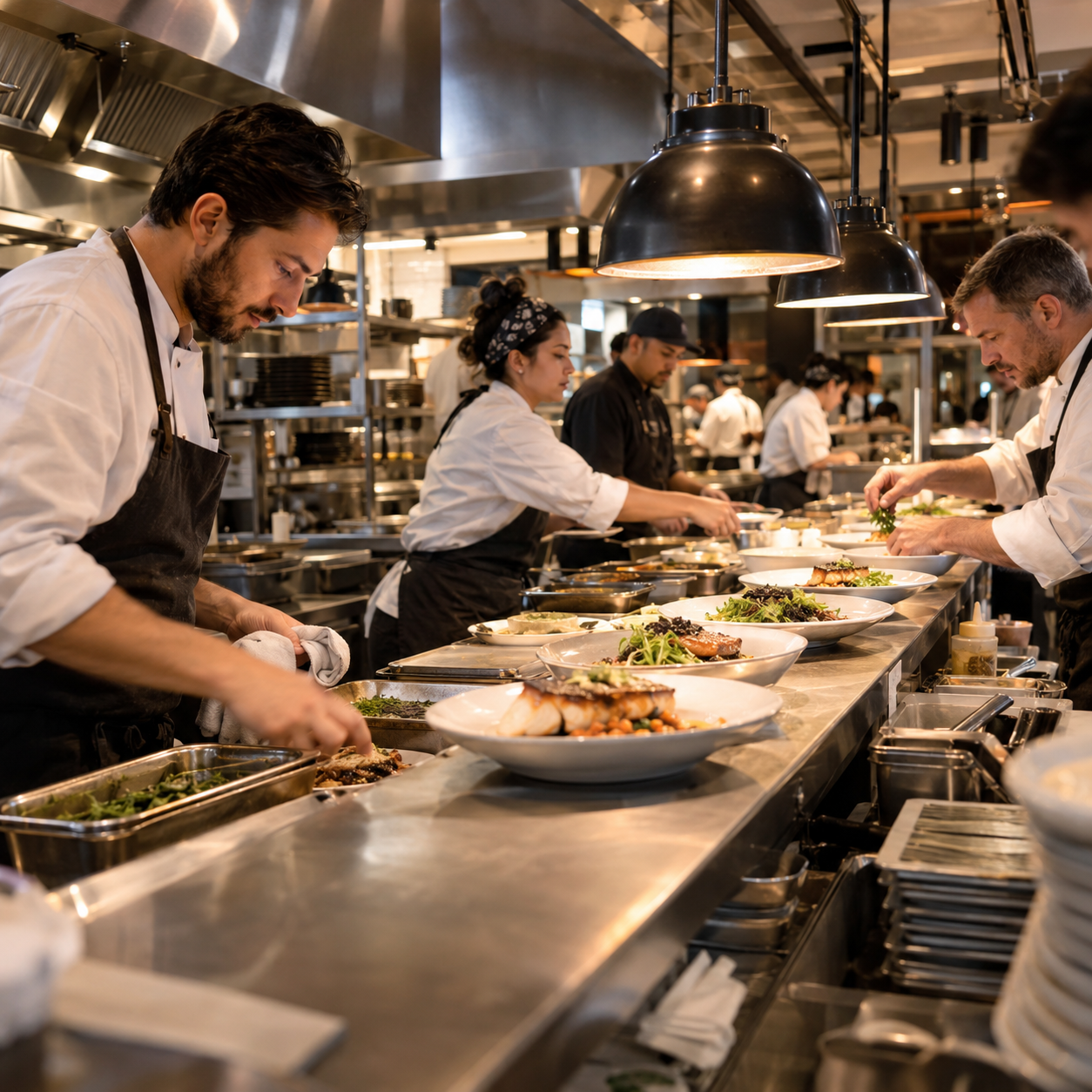
This is not intended to replace the manager. FlowLinks is the monitoring layer that helps surface a visible exception; the restaurant team decides whether the event represents a genuine process issue and what corrective action is appropriate.
Depending on the SOP, the same approach can connect to narrower use cases such as glove compliance monitoring, cross-contamination monitoring, or opening and closing checklist monitoring.
The real insight may be the pattern, not the individual alert
One missed visible step may be an isolated event. Twenty-two similar events at the same station, mostly between 7:30 and 9:00 PM, tell a different story.
Now the manager can ask better questions: Is the workstation layout creating a bottleneck? Is the process unrealistic during peak load? Is one shift short-staffed? Does the required supply run out at the wrong time? Did a training change reduce repeat deviations?
FlowLinks can help establish where, when and how often the configured visible condition occurred. It does not diagnose the organizational cause by itself. That remains a management and food-safety decision. But a repeatable event record gives the team something more useful than memory or anecdote.
What managers should look for during the dinner rush
Which configured SOP deviation appears most often?
At which station or zone does it recur?
Does it cluster during a specific hour or shift?
Does it increase when a workstation becomes crowded?
Are the same camera blind spots generating false exceptions?
After retraining or a process change, do repeat events decline?
A restaurant SOP pilot should measure operational usefulness
A useful pilot is not the one with the most alerts. It is the one that shows whether a specific rule can be observed reliably enough to help the restaurant.
Measure | What to establish |
|---|---|
Detection performance | Of the visible, reviewable deviations, how many did the configured workflow identify? |
False alerts | How many events were caused by occlusion, incomplete visibility or ambiguous movement? |
Camera suitability | Can the current camera actually see the SOP evidence at normal operating distance? |
Workflow coverage | Is the full sequence visible, or only one part of it? |
Event quality | Does the image or clip give a manager enough context to review what happened? |
Repeat patterns | Do deviations cluster by zone, shift, time or operating condition? |
Alert-to-review time | How quickly can the responsible manager review a useful event? |
Operational trend | Do repeat deviations change after process, staffing or training interventions? |
SOP monitoring should support the food-safety system, not replace it
The FDA Food Code is a model framework used by jurisdictions for retail and food-service safety, and restaurant operators still need the appropriate management controls, training, employee health practices and local regulatory compliance. Camera analytics is best treated as an additional visibility layer for selected observable workflows, not as a substitute for food-safety management or regulatory inspection.
The question is not whether the opening checklist was completed
A restaurant can look fully prepared at 5:30 PM and operate very differently at 8:15 PM. The interesting question is what happens when order volume, staff movement and competing tasks put the process under pressure.
For a configured, visually observable SOP, the operational question becomes: When the process appeared to break down during peak service, did the restaurant have enough visibility to know while there was still time to review and respond?
That is the gap continuous video-based monitoring is designed to narrow.
Pro Tip:
Start with one high-value SOP during your busiest service window. Define the visible steps clearly, confirm the existing camera can actually see them, and review repeated deviations by zone, shift and time before expanding monitoring across the restaurant.
Conclusion
Restaurant SOPs can look perfect during opening checks and still break down during peak service. FlowLinks helps restaurants use suitable existing CCTV to monitor selected visible SOPs, surface recurring process gaps and retain evidence for manager review. The goal is not to replace supervisors, but to give them better visibility into where and when operational processes start to drift under real service pressure.
Test One SOP During Your Busiest Service Window
Choose one critical restaurant process, define the visible rule and let FlowLinks evaluate whether your existing CCTV can support reliable SOP monitoring under real operating conditions.
Explore Restaurant SOP Monitoring