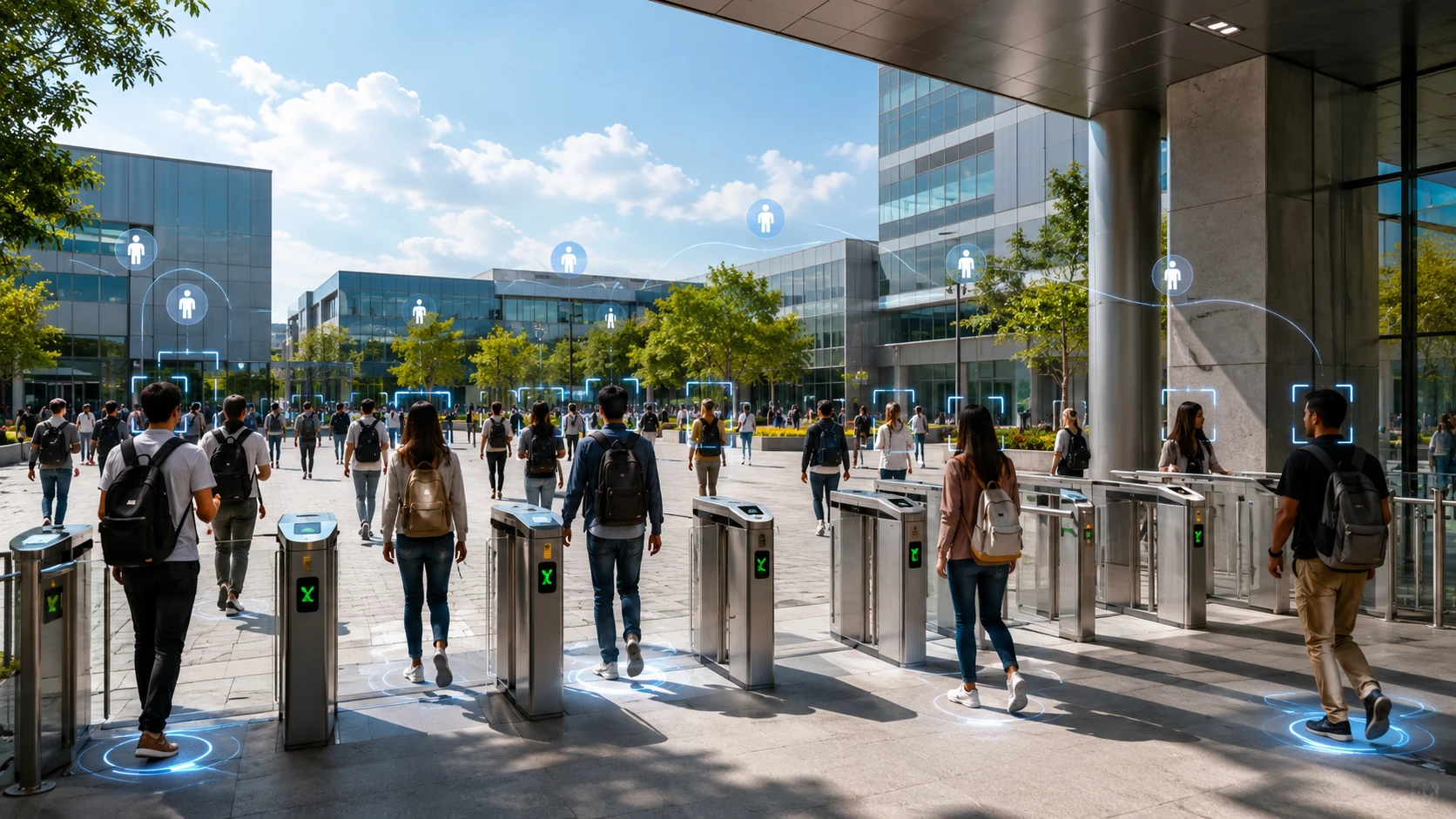
The Problem

Why Campus Movement Is a Blind Spot.

No data on where students actually go

Administrators assume which buildings, corridors and common areas are heavily used — but without footfall data, these are guesses rather than evidence.

Crowding builds before staff notice

Canteens, common rooms and corridor bottlenecks become overcrowded during breaks without any early warning for staff to redirect students.

Facilities are under- or over-resourced

Without movement data, decisions about where to open additional study space, add staff or close underused rooms are based on perception rather than usage.

Evacuation counts rely on estimates

In an emergency, knowing how many people are in each building at any moment is critical — but without live occupancy data, counts take time.

Security cannot prioritise patrol routes

Security staff patrol fixed routes regardless of where student density is highest — creating coverage gaps during peak movement periods.

Timetabling ignores movement patterns

Timetables are built around classroom availability, not how students move between them — creating predictable bottlenecks that nobody has data to fix.

What FlowLinks Tracks

Live and historical movement across every campus zone.

Gate & Entry Footfall

Count every person entering and exiting through main gates, side entrances and building doors — with timestamps and direction tracking.

Building Occupancy

Track live headcount per building so administrators know exactly how many people are in each facility at any moment.

Peak Period Analysis

Identify the busiest entry times, highest-density corridors and peak usage buildings — by day, week and term.

Overcrowding Alerts

Set occupancy thresholds per zone and receive instant alerts when a canteen, common area or corridor exceeds the safe limit.

Movement Flow Mapping

Understand how students move between buildings during break and transition periods — identifying bottlenecks and underused routes.

Facility Usage Reports

Historical footfall reports per building and zone support timetable planning, facility investment and staffing decisions.

How It Works

Five steps from camera to insight.

1

Connect existing campus cameras

FlowLinks integrates with CCTV cameras at gates, corridors, building entrances and common areas via RTSP. No new hardware required.

2

Configure counting zones per camera

Define the entry and exit lines for each camera view. Multiple zones can be configured on a single camera to track movement in different directions.

3

AI counts and tracks movement in real time

The system counts every person crossing a configured line, updating live occupancy dashboards per zone and per building.

4

Alerts sent when thresholds are reached

When occupancy in a building or zone exceeds the configured limit, the administrator or security team receives an immediate alert.

5

Reports generated for planning and review

Daily, weekly and termly footfall reports per zone are available for timetable planning, facility reviews and governor reporting.

Campus footfall analytics dashboard

By the Numbers

Live
occupancy dashboard per building and campus zone
<60s
alert when a zone exceeds its safe occupancy threshold
24/7
footfall tracking across all gates and buildings
0
new cameras required — works with existing CCTV infrastructure

Also in Education

Related Education Use Cases.

Frequently Asked Questions

Common questions.

See Where Your Campus Is Busiest
Right Now.

See how FlowLinks tracks footfall and occupancy across every campus building using cameras you already have.

Book a Demo
WhatsApp