The problem

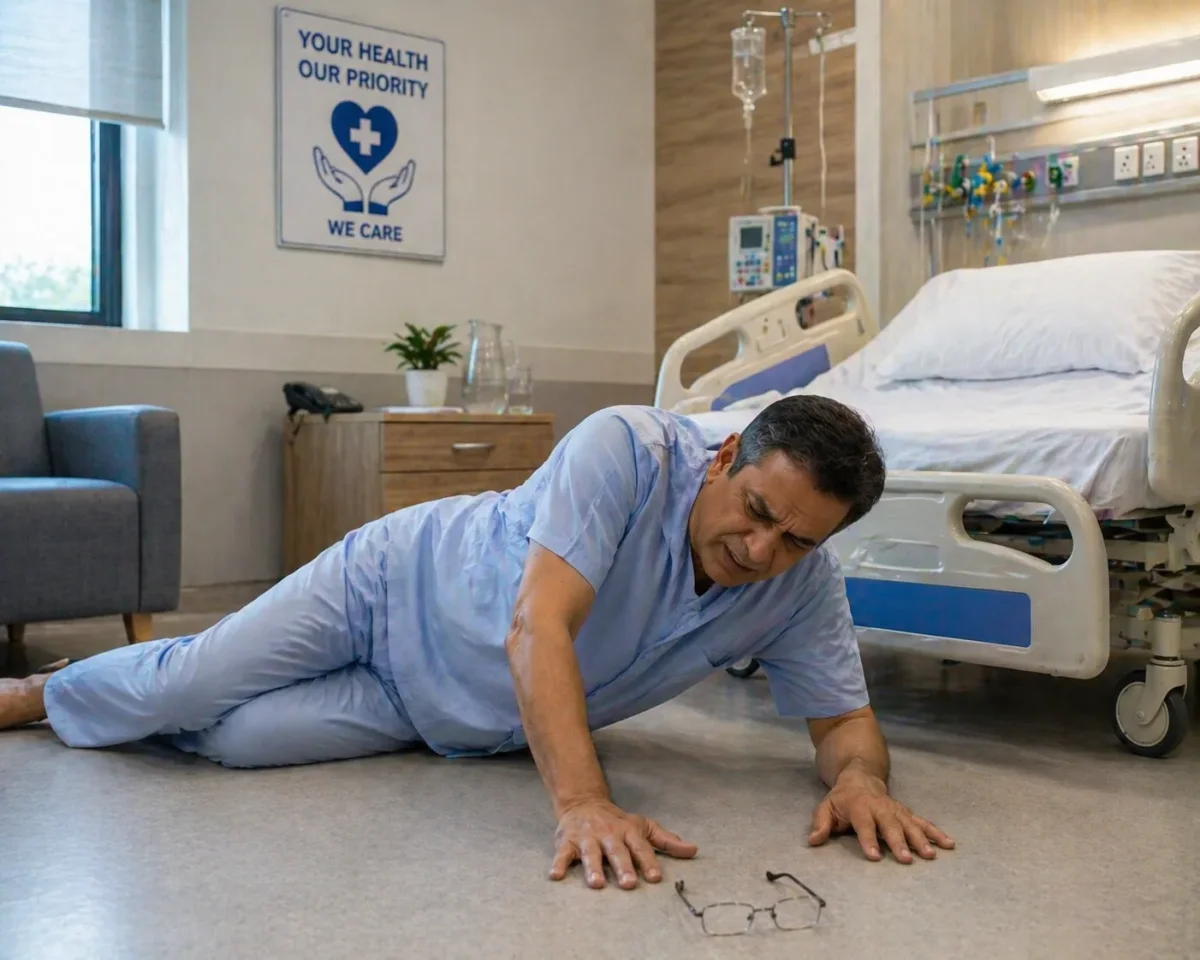
Nearly 1 million inpatient falls every year go unwitnessed.

Most falls happen at night

Patients attempt to get up unassisted during low-staff overnight hours — when response times are slowest.

Staff cannot watch every room

Nurses covering multiple patients cannot be physically present to witness a fall the moment it occurs.

Delayed response increases harm

Every minute a patient remains on the floor after a fall increases the risk of hypothermia, pressure injury and further trauma.

1:1 sitters are expensive

Placing a dedicated staff member in a chair to watch a single high-risk patient costs over $350 per patient per day.

Incident timelines are hard to reconstruct

Without a timestamped record, pinpointing exactly when and how a fall occurred for reporting and root cause analysis is difficult.

Falls carry significant legal liability

Unwitnessed falls with no video evidence leave facilities exposed to negligence claims and CMS penalty reviews.

What FlowLinks monitors

Every ward and corridor, watched continuously.

Fall Event Detection

Detect rapid body-position changes consistent with a fall in corridors, rooms and common areas.

Bed-Exit Alerts

Alert the nurse station when a high-risk patient leaves the bed unassisted — before a fall occurs.

Instant Nurse Station Alert

Real-time alerts with timestamp, ward, room number and video snapshot sent via WhatsApp, email or dashboard.

24/7 Overnight Monitoring

Watch continues through the night shift — when falls are most likely and staff coverage is lowest.

Timestamped Video Clip Per Event

Every detected event is stored with a clip for incident reporting, family communication and regulatory review.

Multi-Room Virtual Observation

One observer monitors many rooms simultaneously — reducing the need for 1:1 patient sitters.

How it works

Live in days, not months.

1

Connect existing cameras

FlowLinks integrates with your hospital or care home CCTV or IP cameras via RTSP. No new hardware is installed in patient rooms.

2

Configure monitoring zones

Ward corridors, common areas and specific rooms are designated as monitored zones. Private patient areas remain off the map.

3

AI monitors movement 24/7

The system watches for body-position changes and bed-exit events continuously — including overnight and during shift handovers.

4

Alert sent to nurse station instantly

When a fall or bed-exit event is detected, the nurse station or designated contact is alerted in real time with location and a video snapshot.

5

Event logged for incident records

Every alert is stored with timestamp, ward, room and video clip — ready for incident reporting, family briefings and CMS reviews.

LIVEFall detection nurse alert
Fall detected — nurse station alerted

By the numbers

~1M
inpatient falls occur every year in the US alone
<60s
alert delivery time from fall detection to nurse station
24/7
continuous monitoring including overnight and weekends
0
new cameras or hardware required in patient rooms

Also in Healthcare

Frequently Asked Questions

Common questions.

Know the moment a patient falls —
not minutes later.

See fall detection AI on your existing hospital and care home cameras.

Book a demo
WhatsApp