The Student Arrived 12 Minutes Late. The Register Never Showed the Full Story

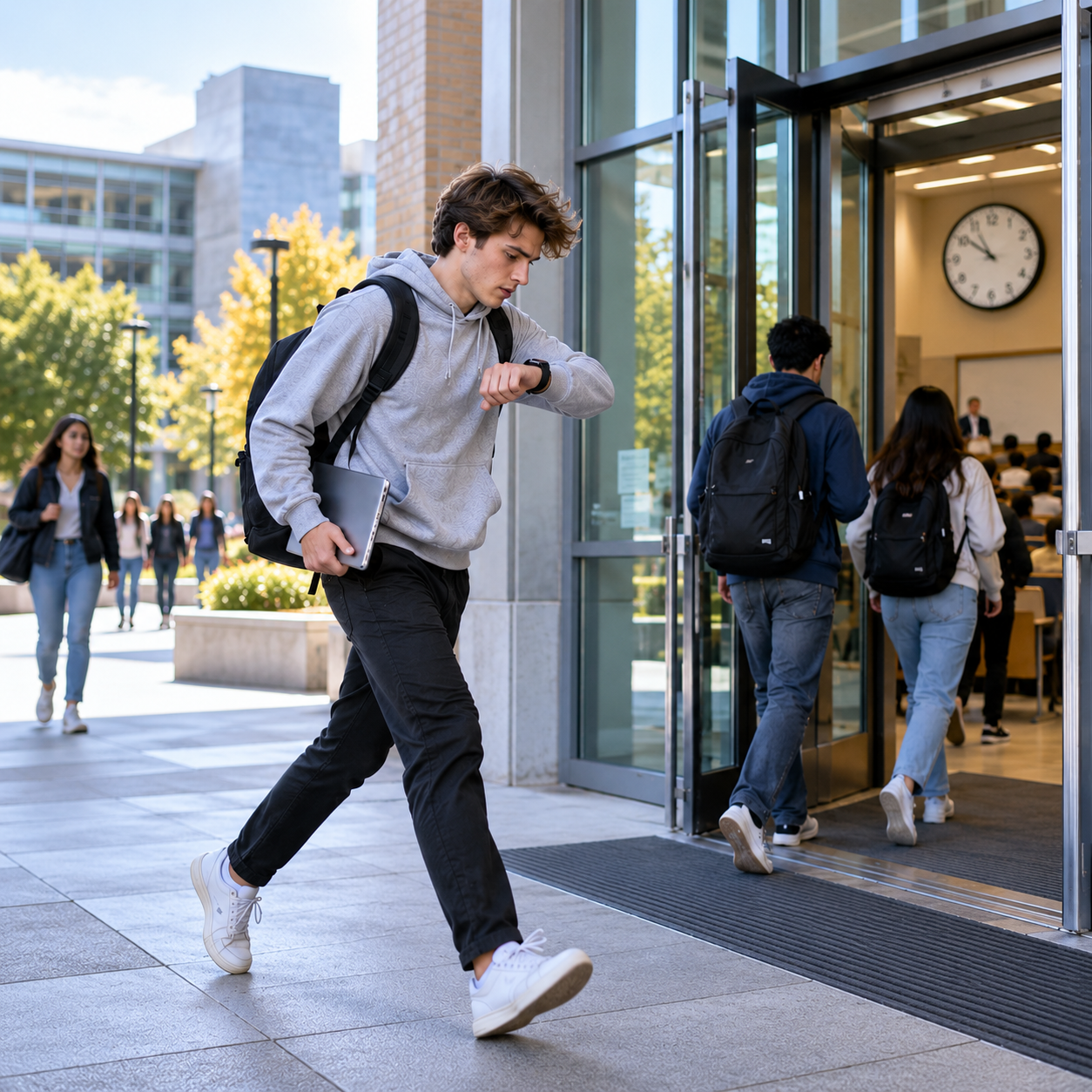
Why student tardiness is more than an attendance problem - and how schools, colleges and universities can use existing CCTV to understand when, where and how often late arrivals actually happen.
It is 8:00 in the morning. At a school, the first lesson may already be beginning. At a college or university, an 8:00 AM lecture, lab, clinical session or scheduled activity may already be underway.
At 8:12, another student enters the campus or building. The student is now present. But the more useful operational question is not simply whether they eventually arrived. It is when they arrived, how often this happens, and whether the institution can see a recurring pattern rather than another isolated late mark.
That is where a traditional attendance record and the actual arrival journey can tell slightly different stories.
Student tardiness is not the same as absence
Attendance systems are usually designed to answer an important question: was the student present or absent? Tardiness introduces another dimension - the timing of that presence.
A student may attend for most of the day and still miss the beginning of a lesson. Another may arrive only a few minutes after the bell or session start. A third may repeatedly arrive late on the same days every week. In a college or university, a student can also be on campus but still reach a scheduled lecture, lab or clinical session after it has started.
Those students may eventually all appear as present, but their arrival patterns are not necessarily the same.
Research involving school-age students suggests that the distinction can matter. A longitudinal study of urban elementary-school students found that greater tardiness was associated with lower standardized reading and mathematics scores. The study also reported classroom-level associations between classmates' tardiness and achievement after accounting for a student's own tardiness.
The point is not that every late arrival causes an academic problem, or that findings from elementary schools should be applied directly to universities. The practical point is simpler: repeated lateness can represent missed instructional or scheduled activity time, and the pattern may matter more than any single late arrival.
8:12 AM means very little by itself
Suppose a student arrives twelve minutes late once during the term. There may be nothing unusual about it. Transport problems happen. Appointments happen. Family schedules change. Weather, traffic and campus logistics create delays.
Now suppose the same student arrives between 8:10 and 8:20 three times a week. Or suppose twenty students consistently enter through one gate immediately after a particular school-bus, shuttle or public-transport window. Or a college notices that late arrivals repeatedly cluster before the same early-morning lab.
The operational question changes. It is no longer simply: who was late today? It becomes: what pattern is creating repeated student tardiness?
That is a more useful question for administrators because it turns isolated incidents into something that can be investigated.
The cause may not be the student
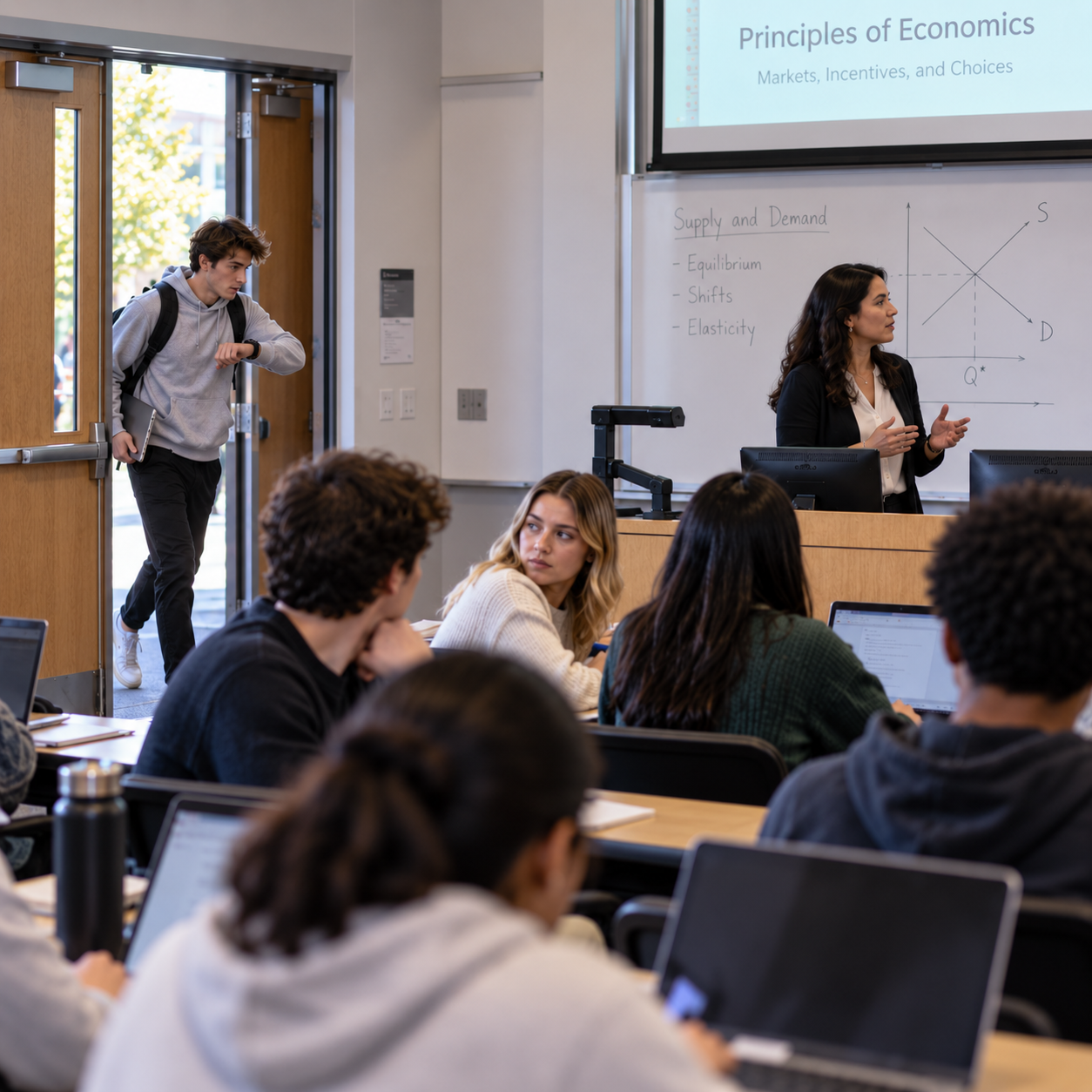
Late arrival should not automatically be treated as a behaviour problem. Research into school tardiness has identified causes that can extend beyond a student's direct control, which is one reason institutions need context rather than simply accumulating late marks.
Institutional schedules can matter too. A review of school-start-time research found that later start times were generally associated with improved attendance and reduced tardiness among adolescents, alongside increased sleep duration.
The same principle of context applies across education settings even though the underlying causes differ. School transport, university shuttle schedules, long campus walking distances, parking congestion, clinical placements and back-to-back sessions can all shape how arrival patterns should be interpreted.
A monitoring system should therefore help answer what happened. Teachers, administrators, students and families determine why it happened and what response is appropriate.
The register records attendance. The entrance records the journey.
Consider two data points: Attendance record - Student present. Arrival event - Student entered the monitored campus or building at 8:12 AM. Both may be correct, but they answer different questions.
Attendance records remain necessary for administration, compliance and teaching operations. Arrival events can provide additional context around punctuality and movement into a campus or scheduled area.
Over several weeks, those events may reveal patterns that are difficult to see from individual late marks: a particular day may show more late arrivals, one entrance may experience a rush after the official start time, a transport route may repeatedly arrive within the same window, or a university building may show predictable congestion before a scheduled session.
The value comes from seeing those events together rather than treating every late arrival as an isolated incident.
Tardiness can affect more than the student who arrives late
Research with school-age students suggests that the effect of tardiness can extend beyond the individual student. One longitudinal study using nationally representative elementary-school data reported associations between higher levels of classmate tardiness and more problem behaviours and lower social skills among peers.
Other research on secondary-school tardiness has highlighted classroom disruption, teacher attention and lost instructional time as recurring concerns.
The specific consequences will differ in colleges and universities, where attendance policies and teaching formats vary widely. A late arrival to a large lecture is not the same as a late arrival to a laboratory, clinical session, examination or small seminar. That is why institutions should define the events that actually matter for their own operation rather than apply one universal rule.
Where existing CCTV can add another layer of visibility
Schools, colleges and universities often already have cameras covering gates, entrances, corridors, reception areas and key buildings. Those cameras may already be recording when students enter monitored areas.
The challenge is turning selected video observations into structured arrival events that administrators can review. This is where FlowLinks Late Arrival Tracking can add an additional monitoring layer.
With suitable existing CCTV feeds, FlowLinks can monitor configured entry points and compare detected arrival events against defined school, campus, class or session start times. A simplified workflow looks like:
Existing CCTV → arrival detected → configured start time applied → late-arrival condition identified → event logged → administrator reviews
Where identity association is configured and supported, the arrival event can also be linked to the relevant student record. FlowLinks does not determine whether a student should be penalized or why the student was late. It helps provide the when, where and frequency behind the event.
Institutions can explore the dedicated student late arrival tracking capability through FlowLinks Late Arrival Tracking.
One late arrival is an event. Repeated lateness is a pattern.
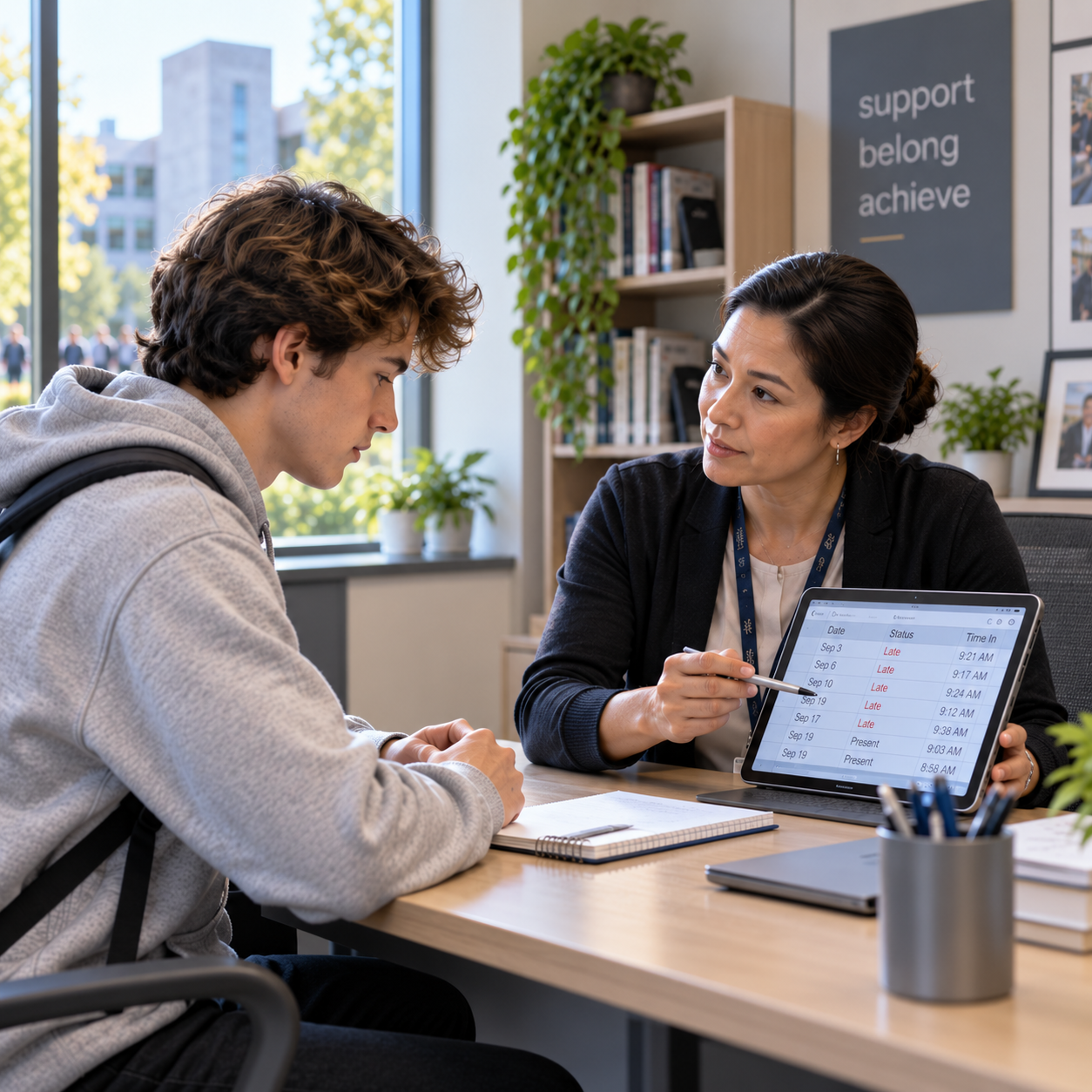
This is where the historical record becomes more useful. Imagine an education campus reviewing one month of detected late-arrival events.
The institution may discover that most students arrive on time, but a subset of late arrivals repeatedly occurs between 8:08 and 8:18 AM. Further review might show that the same entrance, transport window, building or scheduled session is involved.
That does not prove why the students are late. But it gives administrators something specific to investigate. A school may discover a bus-timing or gate-congestion issue. A college may find that parking or shuttle arrival overlaps with an early lecture. A university may see that repeated lateness clusters around movement between distant buildings.
The technology surfaces the pattern. The institution determines what the pattern means and what should change.
What education teams should actually measure
Measure | What it helps establish |
|---|---|
Arrival timing | How late are detected arrivals relative to the configured start time? |
Repeat patterns | Do the same students or groups repeatedly appear late? |
Time windows | Are late arrivals concentrated around particular minutes, days or sessions? |
Entry points | Do certain gates, buildings or entrances show more late arrivals? |
Transport correlation | Do school-bus, shuttle or public-transport windows coincide with repeated lateness? |
Camera suitability | Can the existing camera view reliably observe the required arrival evidence? |
Trend after action | Does the pattern change after schedule, transport or process adjustments? |
A useful student tardiness workflow should not be judged simply by how many late-arrival alerts or events it creates. The useful measurements are operational.
The question is not only whether the student attended
At the end of the day, an attendance system may show that the student was present. That information remains important. But if students repeatedly reach a school, college or university session after it has already begun, administrators may need another question answered: when did they actually arrive, and is this becoming a pattern?
Student tardiness is easier to investigate when it becomes visible as an operational trend rather than another isolated entry in a register. The cameras at an entrance or building may already be recording part of that story. FlowLinks helps turn suitable observations into events that education teams can review.
See Late Arrival Patterns on Your Existing Campus Cameras
Schools, colleges and universities do not need to begin by replacing their camera infrastructure. A practical starting point is to select one meaningful entrance or building, define the relevant start time and evaluate whether the existing CCTV view provides sufficient visibility to monitor late-arrival events under normal operating conditions.
Explore Late Arrival Tracking with FlowLinks →Visit the solution page
Pro Tip:
Look beyond a single late mark. Repeated arrival patterns by student, entrance, day or time can reveal operational issues that an attendance register alone may not show.
Conclusion
Student tardiness is more useful to understand as a pattern than as an isolated attendance mark. By combining suitable existing CCTV with configured arrival rules, FlowLinks can help schools, colleges and universities record when late arrivals occur, identify recurring trends and give administrators more context for review. The technology provides visibility into the event; the institution determines why it happened and what response is appropriate.
See Late Arrival Patterns on Your Existing Campus Cameras
Start with one entrance and a defined session start time. FlowLinks can help evaluate whether your existing CCTV can provide useful visibility into recurring late-arrival patterns.
Explore Late Arrival Tracking