The School Bus Arrived. But Did Every Student Get On — and Get Off?

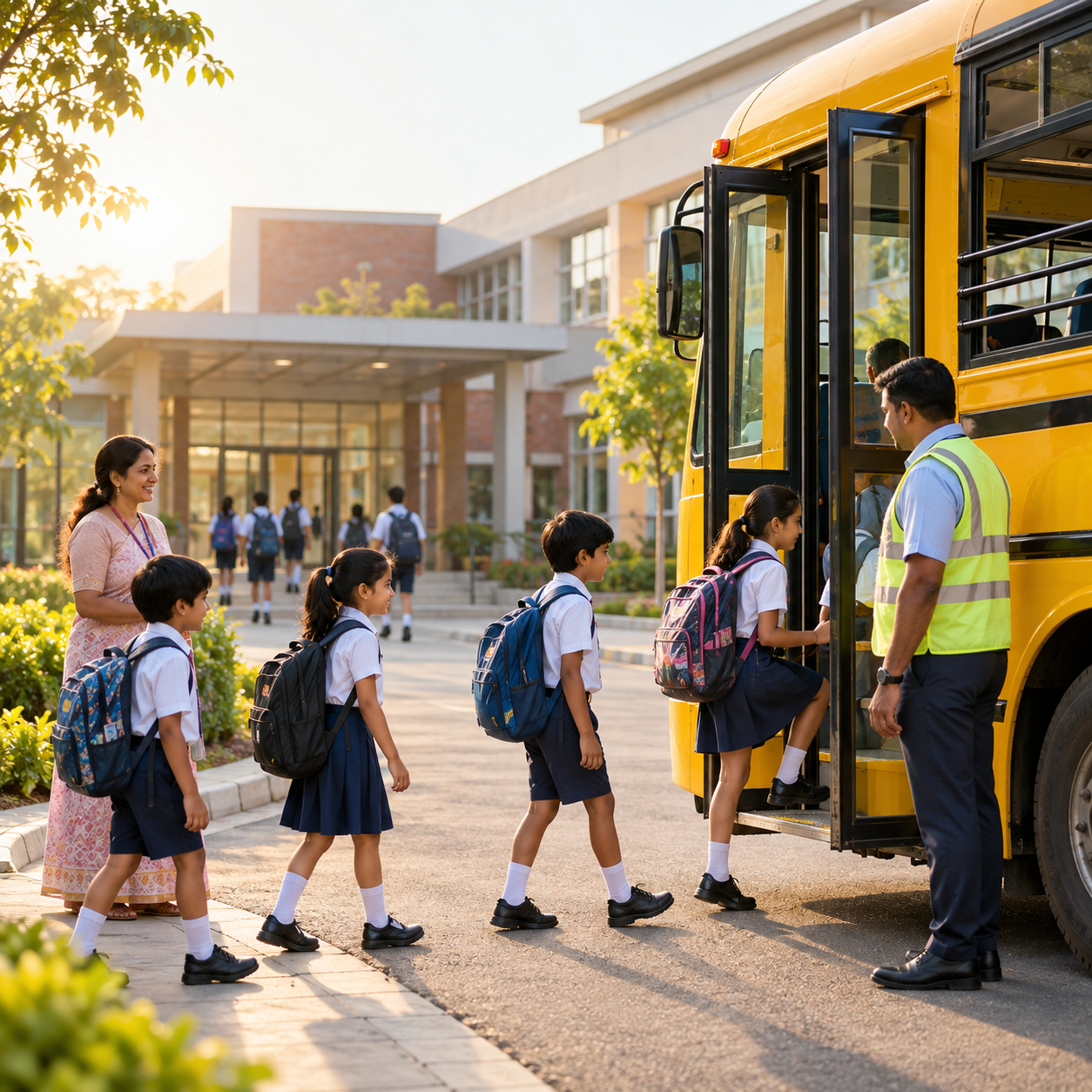
School bus attendance helps schools track student boarding and alighting events and investigate missed or unexpected journey records.
The school bus reaches campus on time. The route was completed, the driver is ready for the next trip, and classroom attendance will eventually show which students are present.
But transport teams may still be missing a different record: which students actually boarded the bus, and which students were recorded getting off?
A vehicle arriving at school does not automatically tell administrators who travelled on it. The same gap appears again in the afternoon. A bus may complete its route successfully, while the school still needs to know whether an expected student boarded, where they left the bus, or whether a transport record needs review.
That is the operational role of school bus attendance. It is different from classroom attendance, and it is different from tracking the location of the vehicle.
School attendance and school bus attendance answer different questions
Classroom attendance answers a familiar question: Was the student present at school?
School bus attendance answers something different: Was the student recorded boarding or leaving the school transport journey?
Those records can complement each other, but they should not be treated as interchangeable.
A student who is eventually marked absent from class may never have boarded the morning bus. Another student may have been recorded boarding the bus but not appear at the expected campus entry point. Those situations require different investigation.
This is why transport visibility should not stop at knowing that a bus completed its route. Schools may also need a reliable record of what was observed at the points where students entered and left the journey.
Boarding and getting off are important moments in the journey
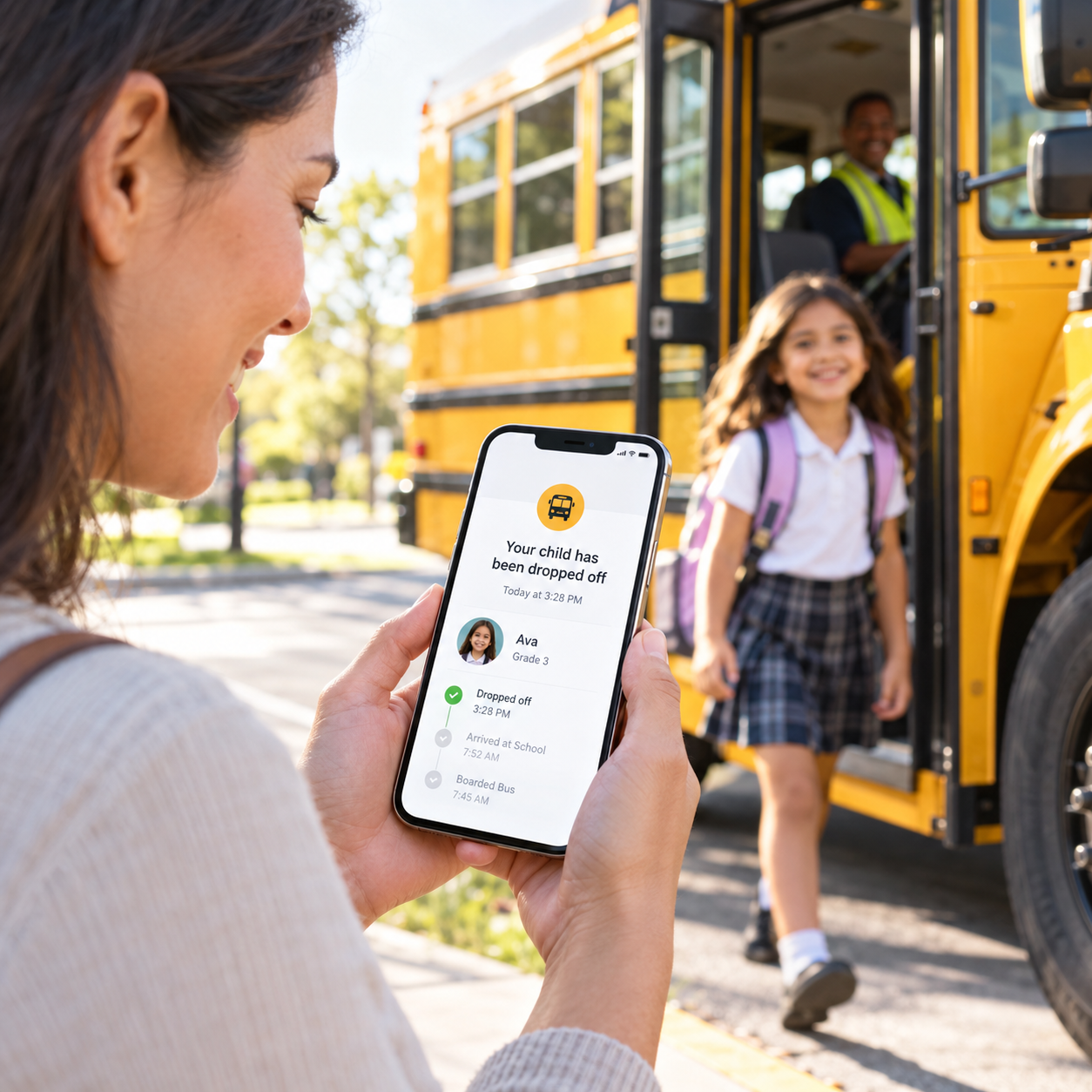
School-bus safety is not only about the period when the vehicle is moving. NHTSA notes that children are especially vulnerable when approaching or leaving a school bus, and its guidance places particular emphasis on loading, unloading and the areas around bus stops. [1]
That makes boarding and alighting important operational events in their own right.
For a school transport team, a useful record may help answer questions such as whether an expected student was observed boarding, which configured route or stop was involved, when the event occurred and whether a corresponding exit event was recorded later.
The purpose is not to turn every movement into an alarm. It is to create enough visibility that an unusual or missing event can be reviewed rather than discovered much later.
Knowing where the bus is does not tell you who is on it
GPS-based transport tracking is useful. It can help schools and parents understand where a bus is, whether it is approaching a stop and how a route is progressing.
But vehicle location and student attendance are two different kinds of information.
A location system may tell you: “The bus reached Stop 4 at 7:32 AM.” It does not, by itself, establish: “This particular student was recorded boarding at Stop 4.”
That distinction matters because the operational question is sometimes not “Where is the bus?” but “Was the expected student observed getting on or off?”
This is also why this article is not about replacing GPS or route-management systems. Vehicle tracking can remain useful alongside a student-level attendance record.
What should a school bus attendance record help schools understand?
A practical student bus attendance record should create context around the journey rather than simply another present/absent label.
Depending on the system configuration and the available camera view, schools may want visibility into which enrolled student was identified during boarding or alighting, the bus, route or configured stop associated with the event, the time the event was recorded, whether an expected boarding event was not observed, and whether transport records and campus attendance appear inconsistent.
These should be treated as operational records to support review, not as infallible conclusions.
If an expected student is not detected boarding, for example, that does not automatically prove that the student was absent. The student may have used another mode of transport, arrived late, changed arrangements, been outside the useful camera view, or simply not been identified reliably.
The system should therefore help surface the discrepancy. People remain responsible for understanding what actually happened.
Manual transport attendance has its own operational challenges
Drivers and bus attendants already have significant responsibilities during pickup and drop-off. They are managing the vehicle, students, traffic conditions and safe boarding or unloading.
NHTSA guidance highlights the importance of managing the loading and unloading environment safely, including visibility, waiting areas and the number of students using a stop.
Against that background, asking transport staff to maintain a perfectly detailed manual record for every movement can add another task at exactly the moment when their attention is already important elsewhere.
Automation can help by turning suitable camera observations into structured events, while staff remain focused on supervision and transport safety.
The objective should be better records with less unnecessary manual input, not replacing the people responsible for the journey.
How cameras can support school bus attendance
Where suitable cameras are already available on buses or around transport areas, video analytics can potentially turn those camera feeds into structured boarding and exit records.
A simplified workflow looks like this: Compatible camera → configured bus/route/student list → student observed and identified → boarding or alighting event recorded → timestamp and journey context stored → exception available for review.
The word compatible matters. Camera placement, lighting, image quality, occlusion and the student’s visibility all affect whether an event can be observed and identified reliably. Existing cameras can be useful, but simply having a camera on a bus does not guarantee that every student event will be captured correctly.
A missing boarding event is not the same as an absent student
Imagine that Student A normally boards at a particular morning stop. The departure window passes, but no boarding event is recorded.
There are several possible explanations. The student may be absent, may have missed the bus, may be travelling another way, or may not have been visible or identifiable to the camera.
The useful action is therefore not: Automatically mark the student absent.
It is: Surface the missing expected event for review.
That difference is important. Good operational analytics should help schools identify exceptions without pretending that the technology always knows the reason behind them.
The same principle applies to an unexpected alighting record. A student being observed leaving at a different stop can justify attention, but the record itself does not explain why the change occurred.
Transport records become more useful when they connect with campus attendance
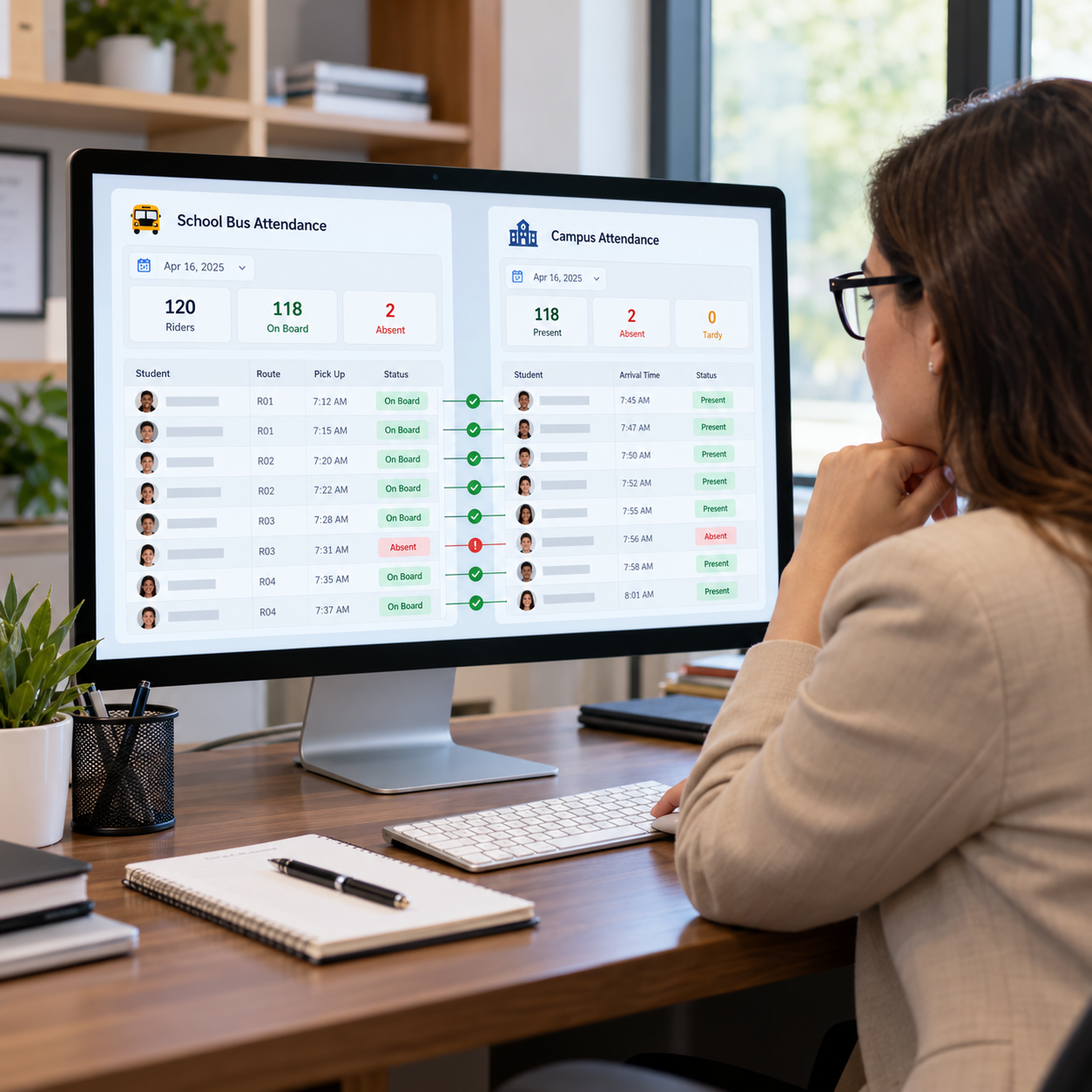
School bus attendance becomes more valuable when it does not remain isolated from the rest of the school’s attendance process.
Consider this sequence: Student recorded boarding → bus reaches campus → student expected at campus/classroom attendance point.
If the first event exists but the later expected attendance record does not, staff have a much more specific discrepancy to investigate.
FlowLinks’ education platform also covers automated campus attendance as a separate use case, using suitable school cameras to identify students and record attendance.
Connecting transport and campus records does not prove that every journey was completed safely. What it can do is make gaps between different stages of the journey easier to identify.
That is more useful than having separate systems that never compare what they observed.
Parent notifications are useful only when the underlying event is useful
Parents often care about very simple questions: Did my child board? Did my child get off?
A notification can reduce uncertainty, but its usefulness depends on the quality of the event behind it.
The right model is therefore: event observed → attendance record created → notification workflow triggered, rather than treating the notification itself as evidence that the underlying event was infallible.
Schools should still have a process for reviewing unusual or disputed events.
What camera-based school bus attendance cannot tell you
Camera analytics has clear limitations.
If the student’s face or relevant identifying information is outside the useful camera view, blocked by another student, too small in the frame or affected by poor lighting, identification performance can drop.
A missing detection also cannot automatically explain why an expected student was not observed.
Camera-based attendance does not replace the driver or attendant. It does not replace safe bus-stop design, supervision, road-safety procedures or communication between schools and parents.
And it should not be confused with GPS tracking. A camera-based attendance workflow can help answer who was observed boarding or alighting; vehicle-location technology answers where the bus is. Those systems may complement one another, but they solve different problems.
NHTSA guidance reinforces that safe school transport depends on the broader environment around boarding and unloading, including visibility, waiting areas and driver behaviour—not simply one technology.
Where FlowLinks fits
FlowLinks can use compatible bus or bus-bay camera feeds to support school bus attendance by creating student boarding and alighting records against configured transport information.
For schools evaluating the commercial system, configuration options and deployment workflow, see the school bus attendance system.
School bus attendance also fits into the wider education video analytics environment alongside automated attendance, late-arrival tracking, campus footfall and other school video-analytics use cases.
The important question is not only whether the bus arrived
A bus reaching school on time is useful information. Knowing where it travelled is useful information. Knowing whether a student eventually appeared in class is useful information.
But none of those records, on their own, necessarily answer the transport question: Was this student observed getting on — and getting off?
That is the gap school bus attendance is designed to address.
A reliable boarding and alighting record can give transport teams another layer of visibility, help them investigate missing or unexpected journey events and provide parents with clearer information about what was observed.
The goal is not to replace the people responsible for student safety. It is to give those people a better operational record of the journey they are already managing.
Pro Tip:
Treat a missing boarding or exit record as an exception to review, not automatic proof that a student was absent. Camera coverage, identification quality and route context all matter.
Conclusion
School bus attendance answers a different question from classroom attendance or GPS tracking. A bus may reach school on time, but transport teams may still need to know which students were actually recorded boarding and leaving the journey. Reliable boarding and alighting records can help schools review missed events, compare transport records with campus attendance and provide better visibility to staff and parents. The goal is not to replace drivers, attendants or transport-safety procedures, but to give them a clearer record of what was observed during each journey.
Add Student Attendance Visibility to School Transport
See how FlowLinks can use compatible transport cameras to support student boarding and alighting records across configured routes and stops.
Explore School Bus AttendanceSources & Citations
- 1.NHTSA, School Bus Safety — guidance on school-bus safety and the increased vulnerability of children when approaching or leaving a school bus.
- 2.NHTSA, Planning for Safety — guidance covering school-bus waiting areas, loading/unloading conditions, student numbers and visibility around bus stops. NHTSA