The Patient Left the Safe Zone. How Long Before Anyone Noticed?

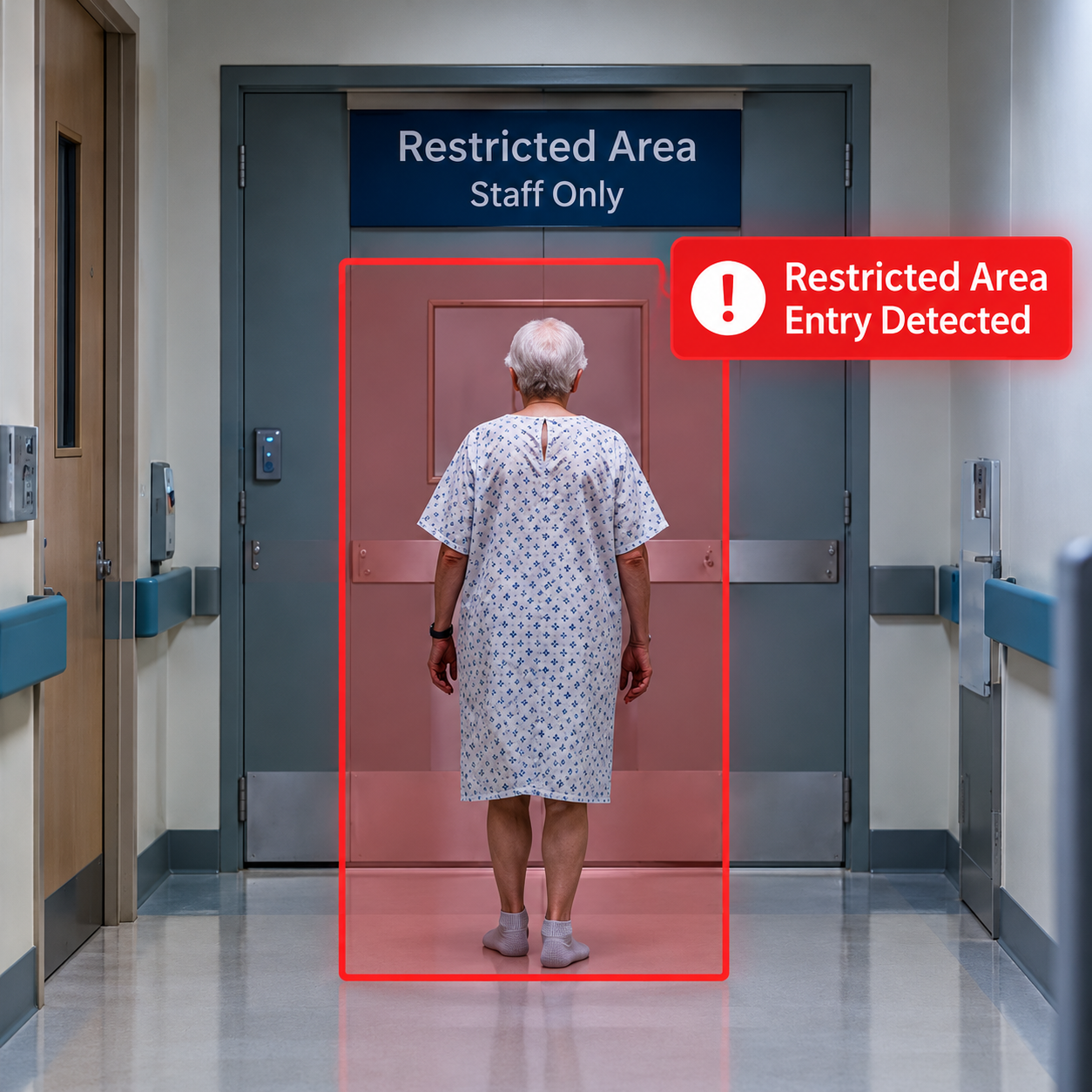
AI-powered patient wandering systems can help hospitals monitor movement, detect configured zone exits and give staff visual context using existing CCTV.
A patient gets out of bed, walks into the corridor and continues toward an area they are not expected to enter. At first, nothing looks unusual. The corridor is busy, nurses are assisting other patients, visitors are moving between rooms, and staff are focused on immediate clinical and operational priorities.
A few minutes later, someone notices that the patient is no longer where they were expected to be. The questions then become urgent: when did the patient leave, where did they go, and could the movement have been identified earlier? This is one of the operational challenges that patient wandering systems are designed to address.
Hospitals and care facilities already use a mix of staff rounds, access controls, alarms and specialist patient-safety technologies. Even with those measures, there can still be a gap between an event happening and the right person becoming aware of it. AI video analytics can add another layer of visibility by using existing CCTV coverage to monitor configured areas and surface relevant movement events for review.
Patient Wandering Is Often a Visibility Problem
Patient wandering does not always begin as a dramatic event. It may start with someone leaving a room, moving through a corridor or entering an area where they are not expected to be without supervision. In a busy healthcare environment, staff cannot continuously watch every doorway, corridor and shared space at the same time.
Traditional processes often depend on someone noticing that a patient is missing from an expected location, that a door has been opened, or that an unusual movement has occurred. By the time the situation is investigated, staff may need to reconstruct what happened from several sources. Existing CCTV frequently contains useful visual evidence, but recorded footage is normally reviewed only after a problem is already known.
What Patient Wandering Systems Are Designed to Do
A patient wandering system helps healthcare teams monitor or manage situations where an at-risk patient moves beyond an expected or permitted area. Different systems solve this problem in different ways. Some use dedicated tags, wearable devices, door sensors or access-control infrastructure, while others use alarms tied to monitored doorways or zones.
Video analytics provides a different and complementary approach. Cameras that already cover corridors, entrances, ward exits and common areas can be used to monitor configured movement conditions. This does not mean video should replace every existing patient-safety system. Its particular value is visual context: an alert can indicate that something happened, while video can help staff understand what happened around that event.
The Difference Between Recording an Event and Detecting It
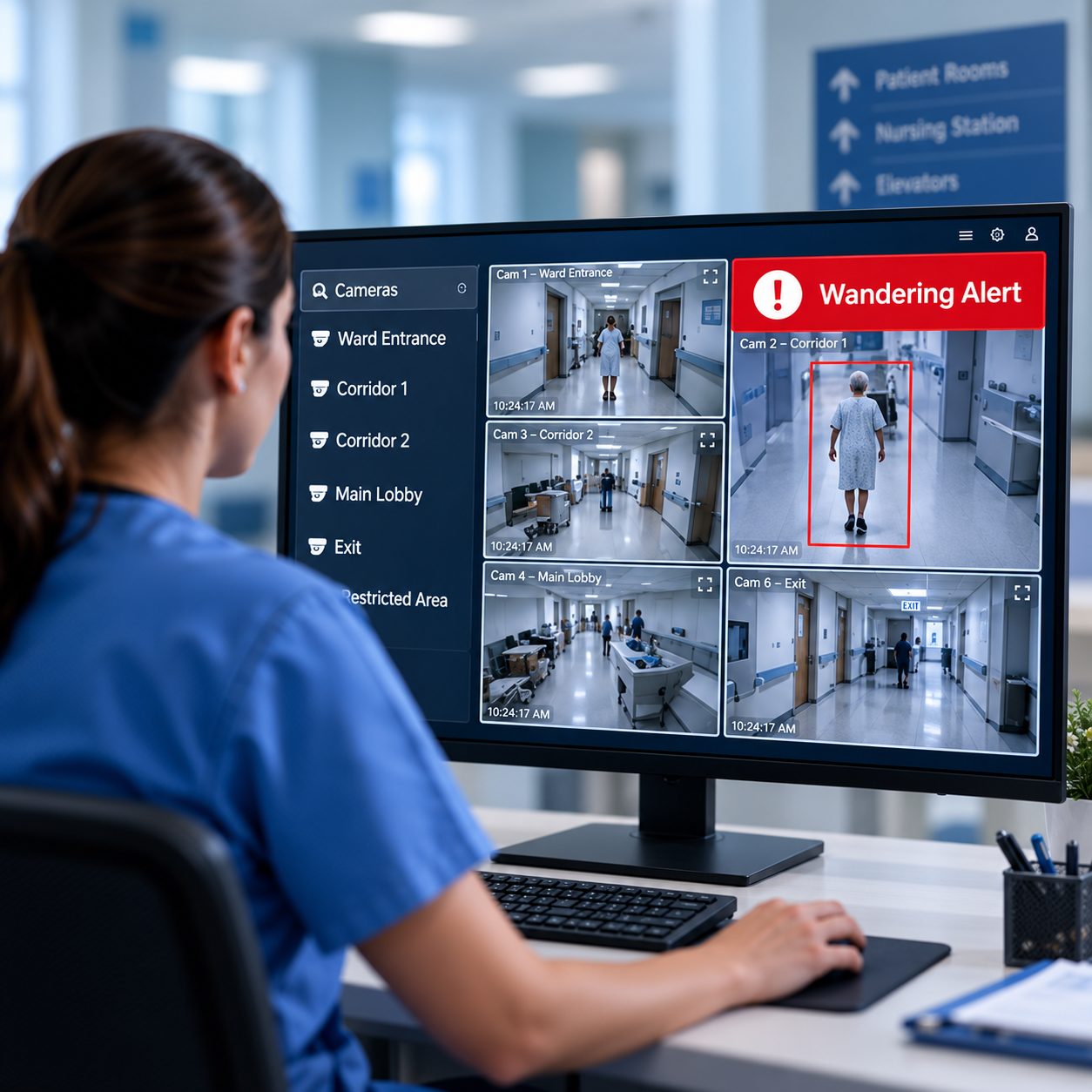
Consider a patient leaving a designated area while the CCTV camera simply records the corridor. If nobody is actively watching that camera, the movement may only be discovered later, after staff realize the patient is missing and begin reviewing footage. The evidence exists, but it is being used retrospectively.
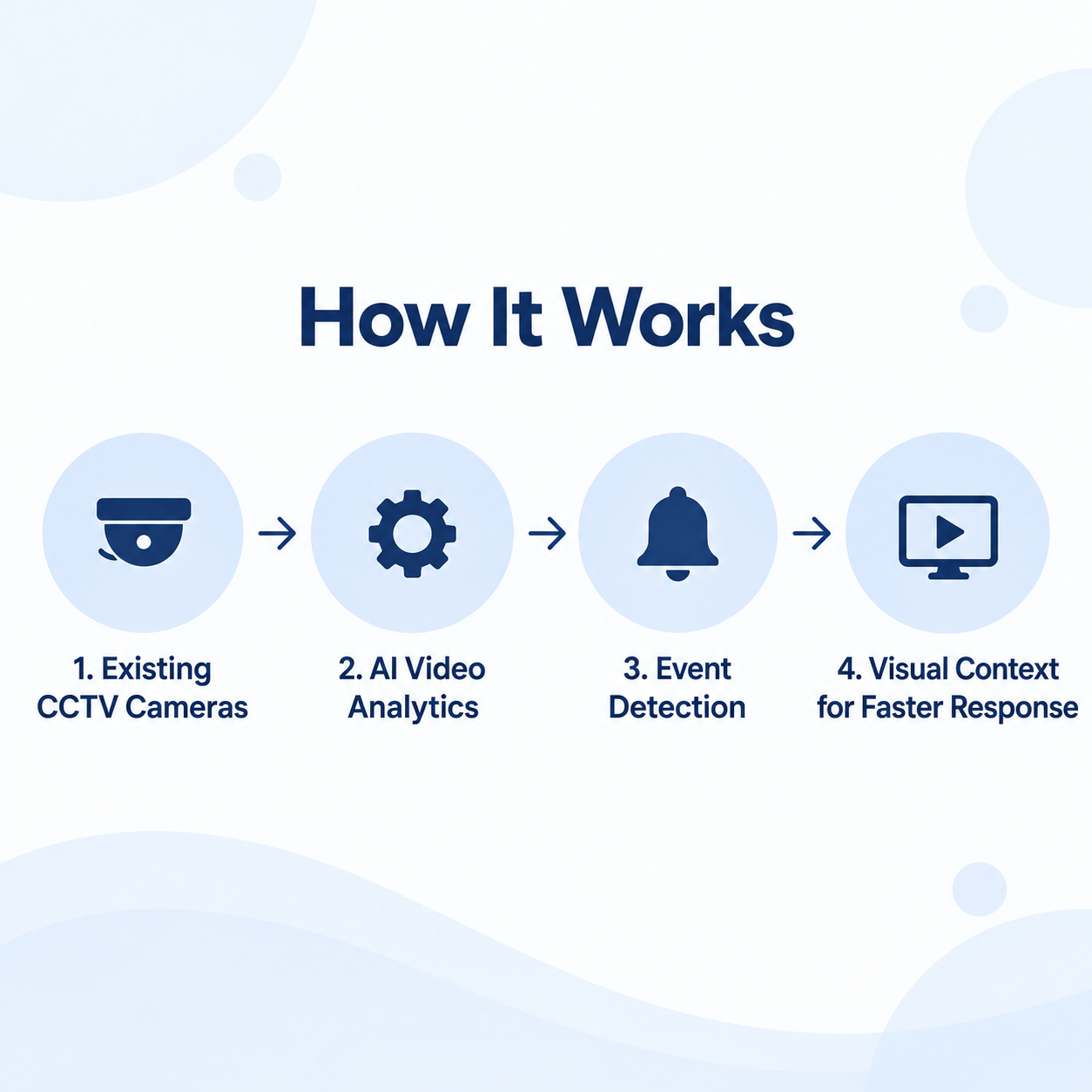
Now consider the same corridor with video analytics monitoring a configured doorway or zone. When the defined condition is detected, the system can create an event for staff review and, depending on the deployment configuration, generate an alert. The camera itself has not changed; what has changed is how the video is being used. Instead of serving only as stored evidence, it becomes part of the operational monitoring workflow.
How AI Video Analytics Can Support Patient Wandering Monitoring
Video-based patient wandering monitoring can be configured around the locations where movement matters most. The exact design should reflect the hospital’s workflows, camera coverage and patient-safety procedures rather than applying the same rule everywhere.
Patient Rooms and Ward Exits
Where additional monitoring is required around a ward or designated care area, cameras covering relevant exits can help identify movement through configured zones. This can provide another source of awareness between routine staff checks without changing the purpose of the existing CCTV network.
Restricted Areas
Some clinical, technical or staff-only areas should not be entered by patients without appropriate supervision. Video analytics can monitor defined restricted zones and create an event when the configured condition is detected, giving staff visual evidence to review alongside other operational signals.
Corridors and Transition Areas
A door sensor can indicate that a doorway was used, but video can provide context about what happened next. Where camera coverage exists, staff may be able to review movement through adjacent monitored corridors and transition areas rather than relying on a single point event.
Exit Points
Entrances and exits are especially important in wandering scenarios. Monitoring selected exit areas can help teams understand whether someone moved toward or through a configured boundary. The purpose is not to generate an alert for every person in the area, but to define meaningful conditions that fit the facility’s response process.
Why Visual Context Matters
A traditional notification might tell staff that an event occurred at a particular door. Video evidence can add useful context: who or what triggered the event, which direction the person moved, whether anyone was accompanying them, and what happened immediately before the event. That context can reduce the time required to understand what staff should investigate next.
For healthcare operations teams, the objective should not be to create more alarms. It should be to make relevant alerts easier to interpret and act on. Visual context is particularly useful when the same doorway or corridor is used by patients, staff, visitors and support teams throughout the day.
A Patient Wandering Alert System Should Not Become an Alarm Factory
More alerts do not automatically create better monitoring. If normal movement constantly generates notifications, staff may find it difficult to identify the events that genuinely require attention. This is why a patient wandering alert system should be configured around operationally meaningful conditions rather than every movement detected by a camera.
Examples might include movement through a specific ward exit, entry into a defined restricted zone, activity at a monitored exit point, or another rule agreed during deployment. The exact conditions will depend on the environment, the camera view and the healthcare facility’s own procedures. The goal is to surface events that deserve attention without turning everyday movement into noise.
Existing CCTV Can Be More Than an Investigation Tool
Most healthcare facilities already have cameras installed for security, incident review and investigation. The same infrastructure may also support selected operational monitoring use cases if the camera views are suitable. That can allow organizations to evaluate AI analytics without assuming that every use case requires an entirely separate camera network.
Camera suitability still matters. Angle, lighting, image quality, obstructions, distance and the visibility of the monitored zone all affect what a video analytics system can reliably observe. A deployment should therefore start with the environment and the operational requirement, not with the assumption that every existing camera will provide the same result.
Patient Wandering Systems Work Best as Part of a Broader Safety Process
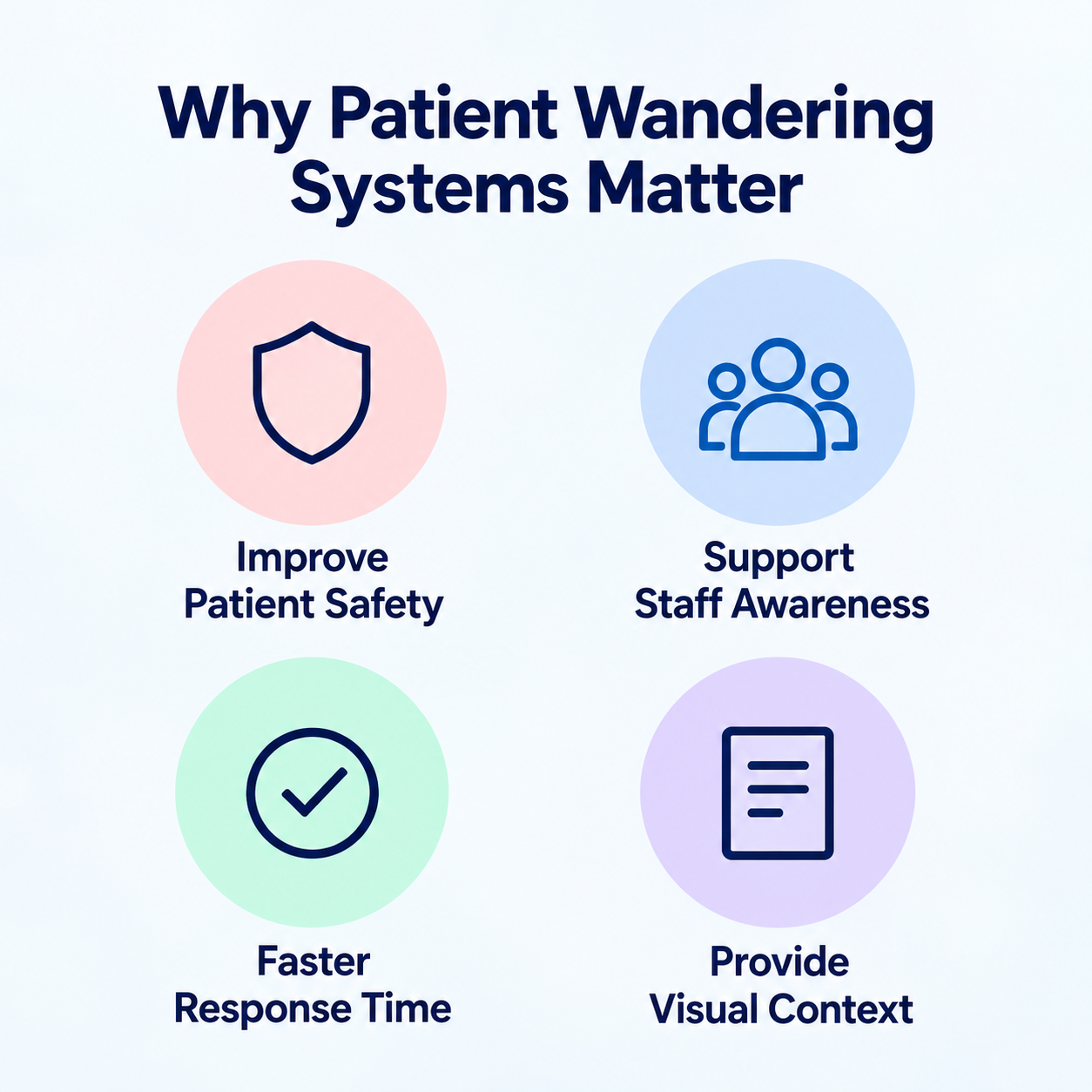
No single technology should be treated as the complete patient-safety strategy. Hospitals may already use clinical procedures, staff observation protocols, access control, nurse-call systems, dedicated wandering-management technologies and security teams. Video analytics can complement those processes by adding visibility into monitored physical spaces.
For example, an access-control event may indicate that a door opened, while video can help staff understand the scene around the event. A staff check may confirm that a patient was present at one point in time, while video monitoring can add information about movement between checks. The value comes from connecting what teams know operationally with what existing cameras can observe visually.
The Bigger Opportunity: Turning Recorded Video Into Operational Awareness
Healthcare CCTV records large amounts of activity, but much of that footage is never reviewed unless an incident occurs. Patient wandering is one example of why organizations are looking at a more active use of video. Instead of asking only whether an event can be found in yesterday’s recording, teams can ask whether a configured condition can be surfaced when it occurs.
That shift—from passive recording to operational video intelligence—can extend beyond wandering. The same camera infrastructure may support other use cases such as restricted-area monitoring, waiting-room visibility, staff safety or other deployment-specific events. Each use case still needs its own validation, camera assessment and response workflow.
What Hospitals Should Evaluate Before Deploying a Patient Wandering System
Before choosing or configuring a solution, healthcare teams should define the operational problem they want to solve. Which patients or areas require additional monitoring? Which doors, corridors or zones are important? What condition should actually trigger an event? Which staff members need to review or respond, and does the current camera coverage clearly show the required areas?
The technology should follow the workflow. A pilot around a small number of high-value locations can help validate whether the camera coverage, detection rules and staff response process work together before the monitoring scope is expanded across the facility.
From “Where Did the Patient Go?” to “What Happened?”
When a patient cannot immediately be located, the response can become more complex as teams reconstruct events across different areas. CCTV may already contain important visual context. The opportunity is to make that video more operationally useful without overstating what any single technology can guarantee.
Patient wandering systems that incorporate video analytics can help healthcare facilities monitor configured areas, identify relevant movement events and provide visual evidence for staff review. The camera may already be there. The difference is whether it is simply recording the corridor or also contributing to a structured monitoring and response process.
Pro Tip:
Start small. Begin with a few high-value locations such as ward exits, restricted corridors or key transition areas. Validate the camera view and alert rules before expanding patient wandering monitoring across the facility.
Conclusion
Patient wandering is not only a security issue; it is also an operational visibility challenge. Staff rounds, access controls and dedicated safety technologies all have important roles, but existing CCTV can add another layer of context when the cameras and monitoring rules are suitable. By applying AI video analytics to carefully selected cameras and configured zones, healthcare teams can turn passive footage into information that is easier to investigate and act upon. The objective is straightforward: help the right people understand a relevant event sooner and give them the visual context needed to decide what to do next.
Turn Existing Healthcare CCTV Into Operational Awareness
Use FlowLinks.ai to monitor configured zones, identify relevant video events and give teams visual context from the cameras already installed across your facility.
Explore Healthcare Video Analytics